Adjustment and emotions / Stress
Adjustment and emotions
Stress
Identifying the demands, available resources and rest possibilities helps to understand a stress situation and decide what support is needed.
Get free informationRecognising the overload
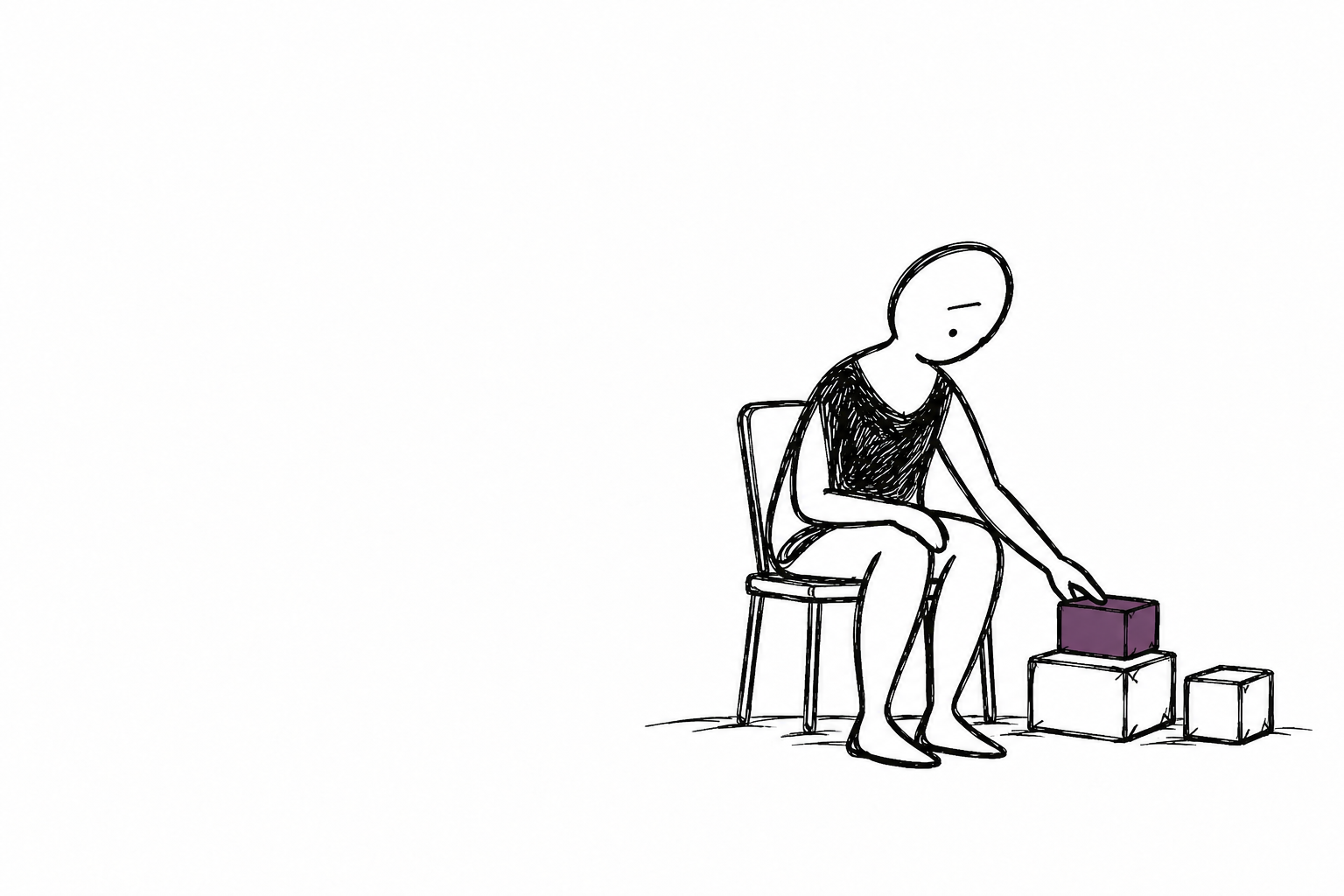
Stress is a response to situations that require adaptation or effort. It can appear at specific times, but also when responsibilities accumulate and there are hardly any opportunities to recover.
It can be accompanied by irritability, difficulty concentrating or disconnecting, physical tension, and changes in sleep. These signals do not identify a cause by themselves or establish a diagnosis.
Rather than comparing how much each person endures, it is interesting to observe what is happening, since when and how it affects daily rest, relationships, and activities. New or worrying physical symptoms should not be automatically attributed to stress.
Demand, resources and exchange rate
Not all overload is solved by organising itself better. It matters the working conditions, the tasks of care, the economic difficulties, the conflicts and the supports with which it is counted.
For example, combining a job with caring for a relative can leave little time to rest. It is important to review the actual burden, what tasks can be shared and what help exists, as well as how the situation is being addressed.
When there are possibilities for change, priorities, limits and agreements can be explored. If some circumstances cannot be changed immediately, it remains relevant to seek support and recovery spaces. Working the personal response does not mean holding the person responsible for everything that happens to him.
When to consult and what to assess
It may be useful to ask for guidance if the discomfort is maintained, it is difficult to recover between days or the sleep, relationships or ability to attend to the usual activities begin to deteriorate.
An assessment can look at current demands, times when stress is highest, sleep, strategies already tried and support available. It can also help identify anxiety, mood or sleep difficulties that may need separate attention.
Objectives may include recovering rest, making decisions, and addressing specific problems. Intervention is context-driven; it is not necessarily limited to learning to relax, nor is it intended to eliminate any tension in life.
In children and adolescents it is necessary to consider school demands, relationships, routines and family context from their own experience. What is suitable for an adult does not automatically move to a minor.
Frequently asked questions
Both situations can occur. Reviewing the time available, the obligations and the supports allow us to distinguish what can be reorganized from what needs to be reduced or shared responsibilities.
Supports, possible limits and forms of recovery can be explored within the actual margin that exists; recognising this margin avoids setting objectives that depend only on further efforts.
They can share feelings, but they are not equivalent. If concern, fear or avoidance occupy an important place, it is appropriate to evaluate them specifically.
In some situations the rest can help. If the same overload returns when the activity resumes, it is worth reviewing the conditions and the support needs, in addition to the rest.
Topics that can help you understand your situation
Life transitions
Adaptation to new circumstances and responsibilities.
Sleep difficulties
When rest needs a self-assessment.
Anxiety and panic attacks
Concern, fear and avoidance that should be differentiated.
Time management
Organisation and priorities as part of the analysis of demands.
Psychological care in ADIR
You can consult adult psychology and child and adolescent psychology services. If you don't know which one fits your situation, explain the reason for your consultation to guide you.
Psychology for children and adolescents
Emotional, behavioural and relationship difficulties during development.
Psychology for adults
Emotional distress, personal changes, and difficulties in relationships.
Related Reading
Post-holiday blues and getting back into a routine
An article on the recovery of daily rhythms after holidays.
Sources of query
Guidance information. Professional assessment allows to interpret each situation individually.